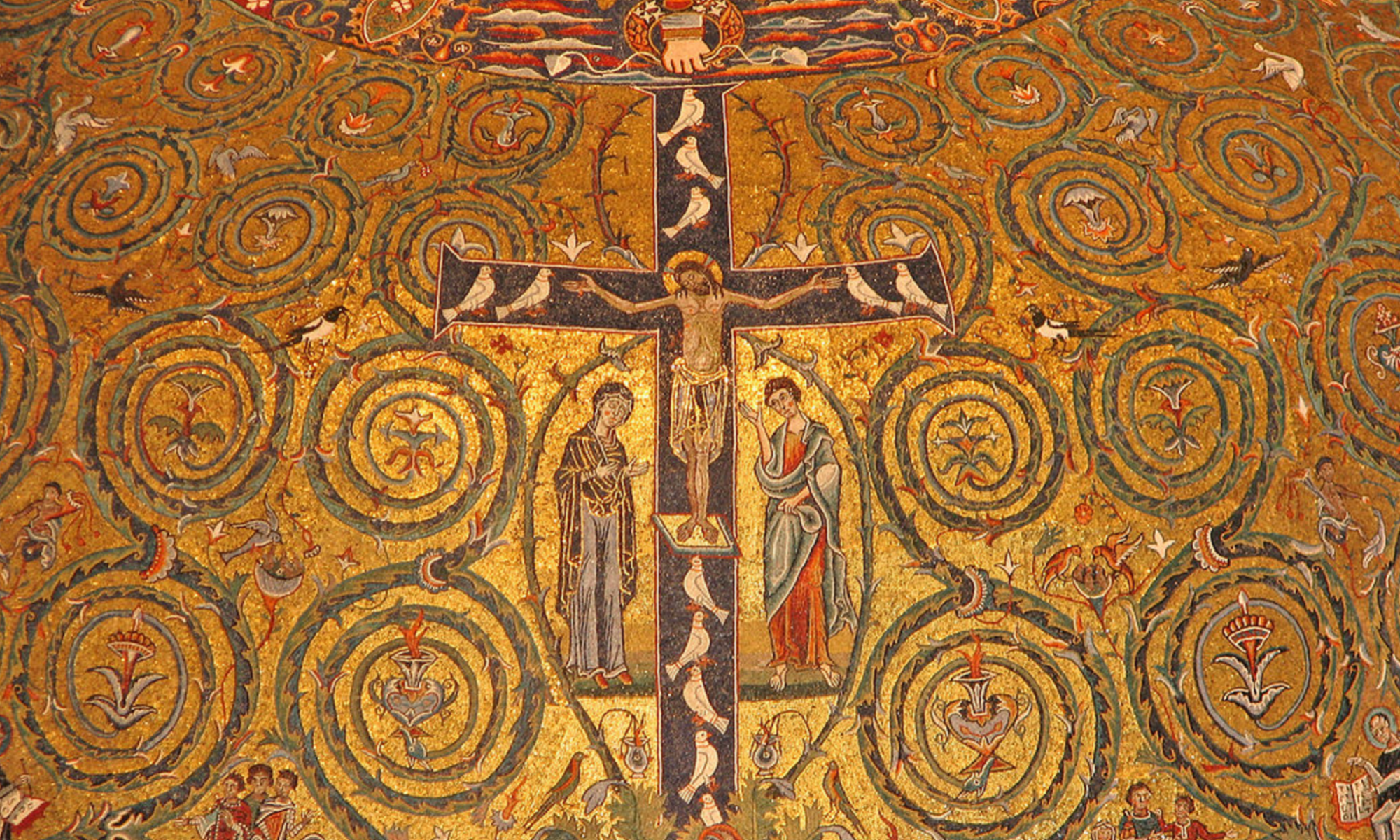

From Dust to Glory

“Remember that you are dust, and to dust you shall return.”

So we are reminded every Ash Wednesday. So Adam was reminded as he left the Garden of Eden, following his failed attempt to become like God by means of his own grasping and striving (Genesis 3:19).

God had created Adam from the dust of the earth, breathing life into him (Genesis 2:7). God had invited Adam and Eve to depend upon him for life and every other blessing. That dependence allowed a level of intimacy and joyful connectedness that the devil simply could not stand. From his envy and malice he viciously attacked, by means of subtle seduction. He pretended to offer what God had already planned and desired to give – to share ever more fully in His Glory.

Remember.

Remember who you are. You are dust. You came from the soil of the earth and will return to it. This world and all its desires are passing away (1 John 2:17).

Remember also that you are destined for Glory. Lent leads us to the rescue and deliverance experienced in the Passover of Jesus’ Passion and Resurrection.

We ache for so much more. Every human heart knows the longing, even if it is buried beneath layers of busyness, rugged survival, or mindless distractions. The desires of this world may be passing away, but we remain image bearers with an insatiable desire to return to our true home.

If you’re looking for an early Lenten read, the first chapter of Erik Varden’s The Shattering of Loneliness is breathtaking. You will be in good company, because Pope Leo has invited Varden to offer a Lenten retreat to him and the other workers in the Vatican from February 22 to 27. I was thrilled when I learned that. During these modern centuries in which many in the Church have forgotten what it means to be human, Varden is a voice crying out in the desert, inviting us to remember who we are.

Drawing from the desert fathers, he describes the painful nostalgia we experience, if we are bold enough to let ourselves feel it: “homesick for a land I recall, but have not seen.”

I remember how I began to experience that nostalgic ache with intensity after I had allowed myself to seek help and healing, beginning nine years ago. I stumbled onto the Welsh word hiraeth, and immediately resonated. There are parallel words in many languages, in which homesick humans attempt to describe this wistful longing within: saudade in French, Sehnsucht in German, banzo in Portuguese, Yūgen in Japanese, and many more.

This fall, I visited the cemetery in my former parish. I tend to weep there as I remember so many beautiful people whom I personally entrusted to the dust of the earth. The grave from one such man, who passed five years ago, bears the inscription, “There is no greater Sorrow than to Remember happy times.”

It is especially in our encounters with beauty that our longing for more is awakened. Even amidst the delight, there can be undercurrents of sadness. It is then that we perceive the enormity of the gap between where we have come from and where we are going.

“I am dust with a nostalgia for glory.” This is the fuller truth of Ash Wednesday, as named by Erik Varden.

We prefer to ignore both sides of this human paradox. We turn instead to our shallow survival strategies, whether we cover our nakedness with feeble fig leaves (Genesis 3:7) or mighty monuments of folly (Genesis 11:4). We pretend that we are not really dust. We create a manageable version of “glory” that we can control. Sooner or later, it all comes tumbling down.

Humility is the answer. The word “humility” comes from humus – the earth or soil or dust from which we are created. Humility grounds us. It allows us to accept both our bodiliness and our profound ache for more.

Humility opens up space for Hope, which is how we abide in the tension. We may be from the soil of the earth, but God has planted a divine seed within us. We would so much rather rid ourselves of the tension!

This urge to escape tension is a potential pitfall amidst the sudden widespread interest in healing. I have met many in healing work who are uncomfortable being present to the pain of others in the messy in-between. They feel an urge to fix or figure out, or to rescue. We can harm others when we do so, leaving them feeling more shame and abandonment in their pain.

As Jake Khym and Bob Schuchts pointed out in a recent podcast episode, healing is not about getting rid of pain (even if it sometimes happens). If that is our goal, we are turning God into a vending machine. Rather, healing is an ongoing encounter with God’s love and truth that brings us to wholeness and communion. Unfortunately, most Christian communities, even in healing ministry, are still more comfortable with spiritual bypassing.

Most of us are familiar with the notion that people turn to perfectionistic striving or to numbing addictions to medicate pain. More particularly, however, it is the vulnerable desire for Glory that we are fleeing. Desire is the most dangerous place in the human heart, often fiercely guarded by shame and contempt. I’m not talking about fleeting earthly desires, but the homesick longing for more. If I let myself feel that longing, I am no longer in control. And what if everyone rejects or abandons me then? It seems far better not to go there – except that this self-protection becomes increasingly exhausting and lonely.

“The Shattering of Loneliness” – what a title for a book! We each experience a desperate loneliness because our trust in God and self and each other has been shattered through betrayal. Through his Passion and Resurrection, Jesus now shatters our loneliness. In our survival outside of Eden, we have been striving to manage and control or to hide and escape. It is once again possible to connect and receive – if we are also willing to wait in Hope.

God so honors us as image bearers that he desires us to grow into His Glory, at our own pace and with our full consent. We need healthy community to do so. Ash Wednesday is a marvelous shared witness to these truths. It’s a truly communal experience. As a priest, I can offer a private Mass, but it would be absurd for me to impose ashes on myself in my private chapel on Ash Wednesday. We witness with each other in God’s presence what it truly means to be called from dust to Glory. We recommit to our shared sojourn through the shadowlands. We rekindle our ache for home.

In the witnessing and connectedness of healthy community, and in being reconnected to the love of our Father, our loneliness is shattered. It’s not that every longing has been totally met. We might actually suffer more in our longing once it’s witnessed – just as poets often feel agonizing desire in the presence of beauty. Some of the holiest disciples I know suffer the most when they feel intensely connected to God. They desire more, and are painfully aware of the gap between human dust and God’s Glory. They are holy because they keep daring to desire, to be known in their desire, and to be stretched in the tension of waiting.

As we receive our ashes this Lent, may we encourage each other in remembering who we are: dust that is called to Glory.

Embracing Paradox

I’ve been appreciating Brené Brown’s newest book (Strong Ground). She names some of the paradoxes that wise and courageous leaders learn to embrace.

I immediately resonated with the chapter on the importance of “negative capability.” It’s a concept she found in a letter from the poet John Keats (1795-1821). Keats praises this capacity that he perceives in great men like Shakespeare – “when a man is capable of being in uncertainties, mysteries, doubts, without any irritable reaching after fact and reason.”

There are moments when abiding in love and truth is particularly painful. These are the moments of the in-between, when we have only partial insights or unsatisfactory options. We feel the pressure to make something happen and get away from the tension as soon as possible. It becomes almost unbearable to abide and wait for fuller truth and goodness and beauty to emerge.

To be human in a fallen world is to live in this tension. We are stretched by two seemingly incompatible truths. On one side is the harsh reality of impermanence. As much as we attempt to deny it, our earthly existence is fleeting. Nothing gold can stay. On the other side is the nonstop human tendency for meaning-making. We insatiably interpret what is happening and why – a task that our brains engage both consciously and unconsciously, even while we sleep! We don’t like waiting to receive the fuller truth. We both desire and need to belong securely and trustingly to something solid.

To put the paradox differently, our human hearts were not created for endings, and everything good in this world comes to an end. What can we do?

As Brené Brown puts it, “Negative capability is a difficult muscle to build.  We’re wired to resolve tension and seek certainty.  This capability requires the ability to reach inward toward stillness rather than out toward counterfeit facts and reason.”

“Be still, and know that I am God” (Psalm 46:10).

Even in turning to God, we are likely – in our urge to escape the pain of this paradox – to engage in yet another form of irritable grasping or controlling in the face of eternal mysteries that are never for sale, and will repel any attempts as seizing or sieging.

I’ve been reading the comments of a few thousand participants in the listening sessions I facilitated for my diocese this fall. You can feel attempts at grasping among many of our longtime parishioners who (in a world where everything has changed so much and so rapidly) expect their parish church to be the one place where nothing changes – only it already has, many times over. You can feel the grasping in the comments of hundreds of others who expect everyone else to adopt their political or liturgical ideology. If only we all thought this way, or all did things this way, our pain and suffering would go away. They forget the flaming sword that will not permit us to return to Eden (Genesis 3:24).

I empathize with their fear and restlessness because I know those movements in my own heart! I have my own versions of grasping or striving or hiding when the tension feels unbearable.

The real invitation is go deeper into the paradox without trying to escape it, nor to escape the tension found therein. This is exactly what Jesus and Mary do on Good Friday and Holy Saturday.

Jesus, true God and true man, does not erase or eliminate the dreadful consequences of our human freedom. Rather, he brings eternal love into the depths of our humanity, loves us to the end, and invites us back into relationship – with his Father and with each other.

His mother Mary does not do what so many churchgoers do when feeling the powerlessness of this paradox. She offers no fixing, no advice, no comparisons with others who have it worse, no backing away from his Cross. She stands with and witnesses.

Her with-ness and witness continue on Holy Saturday, a day of Sabbath – a day of stillness and rest. “Be still, and know that I am God” – these words sound so pleasant and peaceful in other settings. Not so much on a day of Sabbath rest in which your Son is buried in the tomb, and you are utterly powerless. Even then, rather than grasping or escaping, Mary embraces the promises of Jesus and waits in Hope amidst the paradox, not knowing how he will fulfill these promises until it actually happens.

Even after the Resurrection and Ascension, when so many questions remain unanswered, when the disciples are still downcast and doubtful, she abides with them and prays with them for nine days (Acts 1:10-14). They learn from her the capacity for passion and compassion that she exhibited so beautifully at each earlier moment of her discipleship, a capacity which grew and deepened as each mystery unfolded.

Yes, prayer and liturgy and Church are all part of our human response to this painful paradox – not so much being the answer itself, but the context in which The Answer can be encountered, again and again, stretching our capacity to receive – which also means stretching our capacity to suffer! The suffering of the Saints does not diminish as they grow closer to God. The greater their longing, the greater the gap feels between them and the living God. The greater their willingness to stay connected to others, the greater their capacity to suffer with. Show me even a few such saints, and I’ll show you a church community that is thriving on mission!

I find Brené Brown’s words both comforting and emboldening: “Resist the urge to reach for certainty where it does not exist. The longer we can hold that paradox, the greater our capacity to see and honor one another in our fullness AND in our contradictions.”

Faith and Christian community are essential, not as an escape from the tension of this world, but as a shared receptivity of the eternal, and of the mystery of each human person. It is in abiding relationship and receptivity that we can glimpse and taste the goodness of the Kingdom of God, and can persevere in our sojourning until this world definitively passes away, when Jesus comes again with full righteousness, wiping every tear away and abolishing death forever.

A Mood Change

What is life like when we change our mood from “imperative” or “subjunctive” and learn to live in the indicative?

If that question makes no sense to you, don’t worry – I’ll explain along the way.

I love language. I love learning new languages. I love the experience of connection with someone else’s insights, beautifully expressed – all the more so when the words bridge a gap of time and culture. In another life, I could have been a philologist, like Tolkien or Lewis.

I even love grammar. I’m grateful to my high school teachers, who placed such great emphasis upon it. It served me well later in life when I was wrestling with Latin or Greek or German. With my own writing, being grounded in grammar is not unlike the months of training that Daniel underwent with Mr. Miyagi in Karate Kid. Good grammar doesn’t make good writing, but it lays a sturdy foundation, without which creative expression will stagger and stumble.

During my many years of study, I had nine semesters of Latin and five of Greek. I answered hundreds of questions about declension and case, gender and number, tense and mood. My Latin Composition class in 1998 was at times a torture. Dr. Petruccione relentlessly and manically drove us through Bradley’s Arnold, always sporting a bowtie. Twice every week, we submitted our elaborate sentences, translated from English into Latin. If you missed one time, you dropped a letter grade. If you missed a single class, you dropped a letter grade. Late every Friday afternoon, I would wistfully watch my friends go to goof off, while I plodded off to class. The professor could tell that my mind was wandering, but could never catch me!

“And what mood is that, Mister Sakowski?” At the sound of my name, my distracted brain jolted to attention, frantically poring over the last 10 seconds. Somehow, I always come up with the answer. “Subjunctive!” He screwed up his face with a look of “I’ll get you next time!!” But he never did. What can I say? My body pays attention even when it’s not paying attention. I guess hypervigilance has its advantages.

What kind of overachieving college student enrolls in a challenging elective class on late Friday afternoons? The same kind, I suppose, as the high school student who spends four weeks of her high school summer vacation learning Latin, along with seven of her peers. In 1999 and 2000, home for the summer, I taught Latin upon the request of students at my alma mater. We had a blast.

Most of the students were highly competitive overachievers, but one struggled significantly. Honestly, he only passed because I found creative ways to give him points on his tests. It wasn’t hard, because he made up for his lack of Latin prowess with a wicked sense of humor. One section asked them to parse different words. I had to give him bonus points as I howled at his answers:

  Person?  Magister   [“Teacher” – the name the students called me]

  Tense? Very

  Voice? Sometimes mumbles

  Mood? Depends on the day…

As some of you know, verbs can have different “moods” – indicative, imperative, subjunctive, etc. The indicative mood describes or asks about matters of truth (what actually is, was, or will be the case). The imperative mood gives commands. The subjunctive mood expresses the “woulds” and “coulds” and “shoulds.”

When it comes to discipleship and morality, moods also matter! I’ve come to appreciate living in the indicative mood, rather than the imperative or the subjunctive. Eagerly pursuing the good is much more possible when we can tell the truth with kindness, when we can name particularly what actually is without judging it or pressuring it to be a different way. I wrote recently about this calm noticing and accepting of what is as a prerequisite for virtue.

I remember my early years as a pastor. I was overwhelmed and putting all kinds of pressure on myself. I had just returned from Rome, where I had been researching and learning in seven different languages in the writing of my doctoral thesis. Now I was shared as a pastor of two previously separate parishes, and ministering to the Latino community in the region. I had 5-6 Masses each weekend and felt impossibly pulled in three directions. I lived daily with a fear of failure and a felt trapped in powerlessness. No matter how many “shoulds” I checked of my list, it was never good enough – not for many of the people I was trying to serve and not for my harsh inner critic.

Those first several years, I wrote out my Spanish homilies. One memory that is clearer amidst the blur is my struggle to find effective ways in Spanish to translate “should.” That should say something about the content of my preaching at the time – both to others and to myself!

It was only a matter of time before present pressures and past unhealed wounds converged in an unbearable torrent. When I finally reached out for help, I found myself swept away on a journey of transformation that continues nine years later.

I definitely experienced a “mood change” along the way. I’ve been learning and re-learning the joy of living and relating in the indicative mood – accepting what is and engaging it with curiosity and kindness. Then deciding what to do.

Advice is overrated. It is exceedingly rare for me to tell people what to do. I’ve learned to be with, to notice, to point things out, or to pursue by asking curious questions – all in the indicative mood. When I show up that way, the others can tell that there is no judgment, no pressuring them to be a different way than they are now. They feel my genuine curiosity, wanting to get to know them, and delighting in them as they are now.

To those driven by moral imperatives or living in a “should” fortress, this approach seems madness. In their view, you have to get people to do the right thing, or you’re not being a good Christian. Can you feel the fear there?

How  can we discern what is truly good if we don’t slow down, be with, and perceive what truly is? And how can we see what truly is when shame and fear are in the driver’s seat? They literally and figuratively narrow our field of vision.

I’ve learned to pay attention to what shame is up to. Where there’s contempt, there’s shame. When I notice self-contempt or other-contempt coming up, I get curious. I acknowledge the shame (if I don’t, the shame will power up even more!). But I ask if it’s ok to look at what actually is, setting aside judgment for the moment. Can I just be with you in what’s coming up now?

One would think that all the shaming and pressuring to do what you “should” would be a place of greater truth-telling, but it actually isn’t. When shame is talking, we utter strong-sounding and vague statements like “totally messed up” or “wacko” or “off the rails.” We speak in language of always or never, all or nothing, good guys and bad guys, us versus them. If we calm down and slow down, we can look more honestly at what is really happening – often surprised in the discoveries we make! Pretending like certain emotions aren’t there (or wishing they weren’t there) is not truth telling. Pretending like we can live reaction-less lives is not truth-telling. It’s dehumanizing.

Calming down and slowing down, wondering about what really is (even if it seems unglamourous or “bad”), also allows room for desire to breathe and grow.

Desire can take us places that shame never will. Some of you have seen Monsters, Inc. – the Pixar film about monsters fueling their power plant by capturing the fear of children. Then they make a revolutionary discovery – that laughter is far more powerful than fear. Similarly, desire for goodness is far more powerful than any amount of fear-mongering or “shoulding.” When Christians feel threatened, it seems like only fear and shame will get results. It is much messier to get down in the dirt and look up at what’s really going on. But that’s exactly what humility does.

When we humbly, calmly, curiously, kindly, and truthfully look at what is, we begin to see a much more truthful narrative. We start to see the ways in which deeper desire has been shamed, silenced, belittled, dismissed, or hemmed in. I find that shame is the loudest when desire feels vulnerable and exposed. Rather than allow desire (yet again) to be abandoned, betrayed, dismissed, or disappointed, shame will take over the controls. Setting down shame feels risky! But only then can desire be untethered to seek and find the good, and in finding it to desire it all the more.

What mood are you in today? Do you put pressure on yourself to be a certain way. Is your life one of “I should…” / “I just have to…”/ “I really need to…”? What would it cost you to dial down that pressure for a while, to be with a safe person, and to look at what is? You just might discover your deeper desires, and how your good Father is inviting you to soar.

Idols and Isaiah

As Advent comes to a close and we welcome the Messiah, I offer some reflections from the prophet Isaiah. He’s been a close companion of mine these past four months.

Isaiah invites Israel to repent of its idolatry, and return to the living God (see Isaiah 44). On the one hand, he names idol worship as empty and fruitless, ultimately leading both idol-crafter and idolater to be put to shame. Yet his lengthy descriptions of the crafting and worship of idols have a certain warmth and tenderness to them. There is a felt beauty and hopefulness in the process that leads, ultimately, to so much emptiness, enslavement, and misery.

Idols are not always ugly. They’re often appealing and alluring. They bring beauty and soothing and comfort. They promise security and protection. There is a certain satisfaction in idols because they are the work of our own hands. We can see them and touch them. They offer a transactional relationship. We know what we are dealing with.

And idols ruin us. They leave us miserably alone and exhausted, languishing in increasing fruitlessness. The work of our hands can never save us. Idols ultimately enslave and torment us.

I have some obvious idols in my life – addictive pleasure that leave me unhealthy, exhausted, depleted, and ashamed. But much more frequently, I feel the pressure to produce or perform, the relentless “I have to, or else…” I can be pulled back-and-forth between those two poles in an endless tug-of-war – only to feel more powerless and ashamed.

As I prepared this summer for the public launch of the Rebuild My Church Initiative in our diocese, I was amped up with anxiety and fear and pressure, which sometimes became paralyzing. In truth, the challenging situations our churches are facing (as well as the amazing opportunities that are in front of us) are beyond any merely human stratagem. The deeper invitation is for me and for all of us to be renewed in our secure relationship with the Father and with each other. Mission is a way of being.

If I’ve learned anything in my personal recovery journey, it’s that most of us have far more shame and fear and insecurity than we care to recognize. Shame and fear, when unnoticed and untended, become a hotbed for the weeds of idolatry to take root and take over.

During many moments of overwhelm this past spring and summer, I felt a gentle invitation from Jesus to keep embracing the interior integration he is inviting me to. Any “successful” institutional renewal only flow from my interior renewal.

So, at the end of the summer, I began journaling and reflecting on forgiveness, slowly making my way through Robert Enright’s new book on that topic. I shared back in October how that reflection unexpectedly brought me to Robert Frost’s poem “Nothing Gold Can Stay.”

The Lord had more to show me that day. I suddenly remembered the words of Isaiah – “All flesh is grass.” And I found my way to Isaiah 40.

“A voice says, ‘Cry out!’ And I said, ‘What shall I cry out?’”

“All flesh is grass, and all its beauty is like the flower of the field … The grass withers, the flower fades, but the word of our God will stand for ever” (Isaiah 40:6-8)

And I kept reading. Chapter after chapter, the words pierced my heart. I felt encouraged and emboldened by the invitation to be a herald, about to cry out to thousands during the fall listening sessions. It’s easy for me to see the ways that our Catholic parishes are clinging to a familiar institutional culture that offers a false security and comfort while choking off new life. The Lord was showing me the same struggle in my own day-to-day discipleship. How can I invite institutions to repent of their idols if I don’t look at my own?

The Lord also spoke promises and assurances (Isaiah 41:8-10). They seeped into a deeper layer in my heart than ever before:

  Friend

  I have chosen you

  I am with you

  I am your God

  I will strengthen you

  I will help you

  I will uphold you with my victorious right hand

For many days, I kept returning to these words in prayer. Meanwhile, I was finishing reading a book about families raising securely attached kids. I was stunned when the author discussed the prospect of grooming and sexual abuse of one’s own children. After many valuable practical instructions on crucial conversations, she calmly and matter-of-factly named the truth that parents cannot stop bad things from happening. Security comes not from the prevention of tragedy, but from knowing that there is an abundance of secure love and connection before, during, and after any bad things that happen.

Here God was answering some painful cries of my heart in the preceding months. Occasionally, I write my own psalms of lament to God (not easy to do, but worth it!). More than once I have written, “How can I trust you?” – along with a list of complaints to God of the ways he did not stop bad things from happening in my life. Where’s the “protection” in that?

Can you see the appeal of idols here? They twist the promises of God in Isaiah 41:

  The LORD – “I am your God”

     Idols –  “Craft your own god”

  The LORD – “I will strengthen you”

     Idols – “You can be strong on your own”

  The LORD – I will help you”

     Idols – “you won’t need to depend”

  The LORD – “I will uphold you”

     Idols – “You can uphold yourself”

  The LORD – “my victorious right hand”

     Idols – “Bad things happen in this world. You need to protect yourself!”

Idols seduce us by appealing to our fear and shame, and distracting us away from our deeper longings of Faith, Hope, and Love. Idols promise protection against those desires getting betrayed, crushed, rejected, abandoned, or disappointed.

Desire is a dangerous thing. It feels dangerous to us. But it is first dangerous to the devil and his kingdom of darkness. He is a liar and a murderer from the beginning, envying what God placed in us and the lofty destiny he has for us. So he assaults and disrupts our secure relationships with God and with each other. He invites us to turn away from our desires, and instead to live controlled, curated, and comfortable lives. He seduces us individually, but especially loves it when entire church institutions can begin living this way. That way, even when some individuals (like the prophet Isaiah) have abundant desire and lively imagination for more, there is an inertia in place to resist institutional change. Prophets tend to be persecuted.

In a fallen world, in which bad things happen (and all flesh is grass that will wither), it is not an easy thing to abide in Faith, Hope, and Love. Holding desire and imagination for abundance means weeping over what is no longer and waiting for the not-yet. It means trusting in the promises of a God who is truly good.

God actually does NOT promise us that no bad thing will ever happen to us. As human beings, we find ourselves in the middle of a story in which terrible tragedy has already struck. Things are not as they should be, and more bad things will happen. Through the prophet Isaiah, the LORD promises to be our friend, to be with us, to be our God, to help us, and to uphold us as He works out the victory that is already assured.

The birth of Jesus at Christmas brings the assurance of Emmanuel, God-with-us. He enters our world, enemy-occupied territory, on a stealth rescue mission. Precious few people realized that the God-man was in their midst – certainly not the rich or the powerful of this world. They only felt threatened and attempted to murder him. Baby Jesus barely escapes.

I love imagining that flight into Egypt. Baby Jesus, even in his frail humanity, felt calm and secure, not because Joseph and Mary were preventing bad things from happening, but because they were connecting again and again to God, to each other, and to him. They had no idea how this all was going to be okay, except that they were being assured by God’s promises.

Jesus brings true salvation and security. Genuine security is not found in managing or controlling. It’s not found in five-year strategic planning or by setting measurable goals and objectives (even when there is a time and place for those). Genuine security doesn’t even mean that you and I won’t experience fear or failure. We will, and often.

The true security that Jesus brings is the one-flesh union of the heavenly wedding feast, already anticipated on the Holy Night that we are about to celebrate. The gap between heaven and earth is now bridged. Humanity and divinity are now one, in the tiny body of the babe of Bethlehem. What God has joined together, no human being can separate.

Come, let us adore Him.

“Watch!”

Advent is a season of watchfulness. Near the end of Mark’s Gospel, Jesus admonishes his disciples with a simple and strong commandment, “What I say to you, I say to all: watch!” (Mark 13:37).

What does Jesus mean by “watch”?

His one-word command (grēgoreîte) is a dramatic conclusion of extensive apocalyptic prophecies about the destruction of the Temple, the darkening of the sun and moon, the falling of the stars from heaven, and the coming of the Son of Man. You know not the day nor the hour, so watch.

Jesus is not fearmongering – even though many Christians today imagine the apocalypse that way. The coming of the Son of Man is not something we dread, but something we eagerly await, and daily pray for: “Thy Kingdom Come!” “Come, Lord Jesus!”

To be sure, overindulgence, carousing, or spiritual lethargy will hinder us from being watchful and ready at the coming of Jesus. But so will fear! There is an important difference between vigilance and hypervigilance. The former is a sober-minded awareness that is willing and ready to receive and respond. The latter is a fear-based reactivity, a trauma response doing what trauma responses do – ensuring survival at all costs. Jesus is not inviting us to mere survival, but into abundant life.

This fall, I appreciated a prayerful reading of Erik Varden’s The Shattering of Loneliness. Near the end of the book, he suggests a twofold meaning of the word “aware” – 1) to notice; and 2) to take care of or protect. He suggests that the best of the monastic traditions, including the desert fathers, embraced both dimensions of watchfulness. If we exclusively focus on one or the other, we will fail to fulfill Jesus’ command.

I find that, amidst the ruins of Christendom, many of the remnant Christians are so hyper-focused on “taking care of” that they no longer know how to notice with curiosity and kindness. It’s not hard to find hypervigilant and overprotective Christian parents, Christian families, or entire Christian communities. Fear dominates their consciousness and imagination as they try to control their lives and their environments, feeling immensely threatened by “those people.” These attitudes cause grave harm.

When fear predominates, it becomes impossible to live in trust, receptivity, and mutual relationships. I’ve worked with many adults who survived these home and church environments. Beneath all their tendencies of people-pleasing, anxiety, resentment, and control, there is a vast well of grief over never really being noticed, loved, and delighted in for who they are. They had to reshape their identity into cookie-cutter roles in order for the family to feel well-managed and in control.

When fear is intense, our field of vision literally narrows. There is little space for childlike curiosity to notice and discover and grow. I wrote long ago about the difference between Smoke Alarms and Watchtowers. More recently, I explained how virtue is impossible when emotions are eliminated or subjugated.

Christians have understandably felt threatened in the last few centuries. It’s tempting to get stuck in a collective trauma response, bound up in fear, and fail to remember that the victory is already won! Yes, Jesus spends all of Mark 13 offering apocalyptic prophecy. But these teachings immediately precede his entry into Jerusalem and his willing engagement of his Passion. As a victor very much in charge, Jesus overthrows the powers of darkness and brings his Kingdom definitively and victoriously into the midst of a world that is indeed passing away. It is our calm noticing of his presence and activity that will allow us an eager response and a joyful readiness to enter the heavenly wedding feast.

One extreme of “watch,” then, is a fear-based hypervigilance, which is not hard to find in our church communities. In our culture today, you can increasingly find the opposite extreme – an individualistic “mindfulness” that sometimes gets stuck in navel-gazing, or an untethered empathy that leaves no space for truth-telling.

As we see in Jesus, “the kindness of God that leads to repentance” (Romans 2:4) allows compassion and truth-telling to go together. He describes himself and our heavenly Father as “moved with compassion” (Luke 10:33; 15:20), using the Greek word splangna (“guts”). Compassion is an embodied response. We allow ourselves to feel what the other is feeling – especially when it is painful. Rather than backing away, bypassing, or fixing, we stand with as witnesses. Such “being with” is not at all incompatible with telling uncomfortable truths. Once the toxic shaming of “shoulds” is set aside, there is a time and a place for naming honestly and kindly the harm that is being caused by destructive behaviors. Jesus frequently speaks uncomfortable truths with kindness.

What about mindful noticing? During all these years of healing and recovery in my own life, I’ve come to appreciate being aware, here and now, in the present moment. I’ve come to appreciate noticing what is happening, without launching into contempt or judgment. I discover much more truth that way! Much of my former “discipline” was more about self-shaming, drivenness, and perfectionism. From a place of insecurity and fear, I was desperately striving to be good enough to be lovable. That is not virtue.

Of course, overindulgence is not virtue either. As I read Erik Varden’s words this fall, I felt a gentle invitation from the Lord to take the next step from a calm noticing into a healthy “taking care of.” I can be mindful of what is really happening here and now, and then freely engage in a “yes” or “no.” My desires are still unruly and disordered, in need of guidance and direction. They do not need shaming or fixing or subjugation, but they do need to be brought over to the Kingdom of God. So long as my desires belong only to this fallen world, they will indeed pull me downward, in a way that steadily ruins me. As I learn to receive them, accept them, and allow Jesus to love me there, I discover that I can be free in Christ; I can say “no” and be okay.

Jesus is the Word made flesh. He humbles himself to share in the clay of our humanity so that we can be exalted to share in his divinity. Mindfulness has enormous value, but is not an end in itself. It opens us to the transcendence that Jesus brings. It opens us to the fullness of Truth. He is the Way, the Truth, and the Life. Jesus entered this world precisely so that we can be wedded to him and thereby transcend this world – because this world and all the things in it are passing away.

Without the Incarnation, there is no Hope. There is no “taking care of” possible in a world that is under the dominion of its seducer, Satan. Jesus undoes that betrayal, not by eliminating its consequences, but by forging a path through suffering and death into eternal life. Genuine mindfulness allows us to see and follow that path, without being dismayed or distracted by the immensity of suffering that we would prefer to ignore, and definitely without being seduced by the allurements of this world.

Genuine mindfulness allows us to follow the path (not just “me”). The command of Jesus to “watch” is plural (grēgoreîte). He is not inviting an isolated and individualistic mindfulness, but a shared path of noticing and responding. We were never meant to exist as isolated individuals. It is not good for man to be alone.

Pope John Paul II articulated this balance in his Law of Gift: “Man cannot fully find himself except through a sincere gift of himself.” But we cannot give ourselves without much diligent labor of human integration. We must first become more of a whole person, self-aware and self-possessed – thereby allowing us to make a free, wholehearted, and fruitful gift of ourselves. Each person is a unique and unrepeatable mystery, worthy indeed of being loved and cherished in that uniqueness. But that unique giftedness is for the sake of bringing life and healing and goodness to the rest of the Body of Christ. It’s a gift to be given away.

We desperately need healthy Christian community – community which allows us (in the words of Curt Thompson) to be seen, soothed, safe, and secure. It is through a shared and communal “noticing” that each of us can discover more fully who we really are. It is also in that shared and communal noticing that each of us can emerge in lives of discipleship and truly “take care of,” truly become the steward of our story. It is then that self-awareness and self-possession can become self-gift. It is then that we can be one with Jesus in laying down our lives that others may live.

Come, Lord Jesus!

Dies Irae

For Catholics, November is a month of remembrance. We become mindful of many things we would prefer to forget – death and judgment, heaven and hell.

“Memory” in the Jewish, Catholic, and Orthodox traditions is not mainly a matter of looking backwards, but of becoming more mindfully present. Through holy rituals, we “remember” saving events such as the Passover in Egypt, the birth of Jesus, or his death and resurrection – in a way allows us here today to participate and become true sharers in those saving events. They become here and now for us. We also “remember” what is yet to come, the fullness of life in the Kingdom of God. We glimpse the goodness of the Lord in a foretaste and anticipation of more to come.

November begins with the twin celebrations of All Saints’ Day and All Souls’ Day – reminding us that the love of Jesus connects all the members of the human family, even those beyond the grave. In the very flesh and blood of the risen Body of Christ, we are truly united to those who have gone before us. We are never alone. Our deepest longings are never in vain. We are reminded not to get stuck in this fallen world that is quickly passing away.

All around us (at least here in the Northern Hemisphere) nature enters its annual cycle of death and decay. So swiftly does the dazzling and majestic fruitfulness of fall plunge into darkness and decay – particularly for those of us in the upper Midwest!

There is a marvelous medieval hymn traditionally sung during this month of remembering death and the Final Judgment: the Dies Irae. Amidst decades of what Bishop Robert Barron has often described as “Beige Catholicism,” this hymn has been all but forgotten. What is more, those few who remember it tend to be drawn to it for all the wrong reasons: fear-mongering, shaming, or scrupulosity. It doesn’t help that there are bad translations that reflect the shame of the translator more than the actual text. Indeed, the English translation provided in the video linked above describes “universal dread” and a “severe” Judge with “searching eyes.” None of those words are there in the original Latin poetry!

The Dies Irae has captivated human imagination for centuries. In 2014, Thomas Allen of the CBC (Canadian Broadcast Company) offered a playful and fascinating exposition on the influence of this hymn upon musical history.

Yes, the hymn is haunting and disruptive – especially to privileged Americans who would prefer to live comfortable lives and somehow stay young and powerful forever. But it is ultimately an invitation to trust Jesus and step into real Hope.

The world we live in, insofar as it was created by God, is good and beautiful. He entrusted it to us humans as the stewards. We failed in our stewardship. The world we live in, through the devil’s envy, malice, and seduction, is now enemy-occupied territory. Jesus describes the devil as “the ruler of this world” (John 12:31). This world and all the things in it are passing away (1 John 2:17).

The first verse of the Dies Irae reminds us that the “Day of Wrath” will dissolve this world in ashes. However, it goes on to describe the victory of Jesus on the Cross, and the invitation to humble ourselves before him as we receive the redemption that he freely gives. Neither our own merits nor any power of this world will save us on that day. We place our trust in Jesus alone.

“That Day” is also described as lacrimosa dies illa (“That Day of weeping”). We can see why this hymn has been buried in the West during my half century of human existence. We live in a culture that has forgotten how to grieve. And we definitely live in a culture that struggles to engage in real repair when harm has happened. “That Day” of Jesus’ coming will bring both. It is not merely a Day of Judgment; it is a Day that brings full Justice and definitive resurrection and renewal – which is only possible with the fulness of Love and Truth that Jesus will bring. Jesus will definitively heal our shame, if we will allow it.

I’ve developed a keen radar for shame. For several years now, I’ve been contending with my own shame (as well as the shame of others who harmed me in my life – shame that doesn’t belong to me). I’ve learned, at least some of the time, to stand calmly in the face of shame – not to run away, nor to power up, nor to freeze, but to draw closer with curiosity and kindness.

I’ve been learning from Jesus in the Gospels. He frequently pursues those who are feeling shame – when he calls Matthew the tax collector (Matthew 9:9), when he tells the woman caught in adultery “I don’t condemn you” (John 10:11), when he awakens the thirst of the Samaritan woman at the well (John 2), and in his various encounters with Peter. When Peter denies Jesus (as predicted), Jesus turns to look at Peter (Luke 22:61) – not with accusation, but with love and truth. Peter goes out and weeps bitterly. He sees an almost unbearable gaze of kindness – far more painful and more helpful than any accusation or name calling. Peter suffers again after the resurrection, when Jesus awaits him on the seashore, having already lit a charcoal fire (John 21:9-19). He reminds Peter of his threefold denial, not to add to Peter’s shame, but to bring that shame into the light and transform it.

These encounters with the merciful and truth-telling love of Jesus help me imagine what Judgment Day will be like. When I hear the chanting in the Dies Irae describing the “Day of Wrath” or “That Day of Weeping,” I imagine him gazing with love at each of these women and men in the Gospel, seeing right through them, accepting them, choosing them, and inviting them to total conversion. The kindness of Jesus always puts love and truth-telling together. Kindness heals shame, through a gentle yet utterly necessary unveiling of the full truth. That is what “apocalypse” literally means – “uncovering” or “unveiling.”

Shame is a master of disguises. It shows up in outbursts of rage, in ghosting other people, in “cancel culture,” in witty-but-cruel name calling, in self-loathing, or in self-destructive behaviors. Where there’s contempt, there’s probably shame. Where there’s vagueness, there’s probably shame. Where there’s all-or-nothing language, there’s probably shame. I’ve learned to detect the lurking presence of shame, and to draw closer to it, while respecting the sacredness of others’ freedom. This kind and curious pursuit is not what people expect!  I love those moments when it becomes possible to tell the fuller truth with kindness – not to paper over, not to humiliate or condemn, but to be with each other in love and respect while acknowledging all the particulars.

This definitive repairing through the kindness and justice of God is exactly what the Dies Irae is about. Jesus will assemble the nations. Death will stand in astonishment as all the tombs are opened, and all our bodies raised (John 5:25-29). The victory wrought by Jesus on the Cross – overthrowing the cruel empire of sin and death – will be fully unveiled. So will all of our thoughts, words, actions, and omissions. The stories of each and all will be told in their full and unedited versions. In the words of the Dies Irae, “The written book shall be brought forth, in which all is contained, from which the world shall be judged.” No doubt, “My face will blush with guilt” – just like Peter or Matthew or the Samaritan woman. In my fear and shame, I may dread that “the day” will be like a blazing oven that burns up everything (Malachi 3:19) But if my trust is in the victory of Jesus, I will experience “the sun of justice with its healing rays” (Malachi 3:20). There is no other way.

We can conclude with the beautiful words of Pope Benedict XVI in his 2007 encyclical letter on Hope. He describes this encounter with the fire of Jesus’ love, whether on the Day of Judgment, or as a purgatorial experience following my own death. He comments on the apostle Paul’s reflections in 1 Corinthains 3, which describe some of us being saved, but “as through fire.” As Benedict explains, “the fire which both burns and saves is Christ himself, the Judge and Savior. The encounter with him is the decisive act of judgment. Before his gaze all falsehood melts away. This encounter with Him, as it burns us, transforms and frees us, allowing us to become truly ourselves. All that we build during our lives can prove to be mere straw … and it collapses. Yet in the pain of this encounter, when the impurity and sickness of our lives become evident to us, there lies salvation. His gaze, the touch of His heart heals us through an undeniably painful transformation ‘as through fire’. But it is a blessed pain, in which the holy power of his love sears through us like a flame, enabling us to become totally ourselves and thus totally of God” (Spe Salvi n. 47).

Without the Day of Judgment, we cannot share fully in God’s holiness, nor be fully and authentically human. Only the truth-telling and merciful love of Jesus can bring full flourishing and righteousness. Therefore, we pray ancient Christian prayer: “Come, Lord Jesus!”